Case context
There are many files, some duplicated or missing pages, and there is a strong temptation to use AI to summarize everything quickly.
Session mode surfaces the fastest pathways for live workshop use.
Editorial simulation
A broker sends you a package of internal files and memos that look sensitive, and the editor wants to know by the end of the day what the core claims are and what can actually be trusted.
There are many files, some duplicated or missing pages, and there is a strong temptation to use AI to summarize everything quickly.
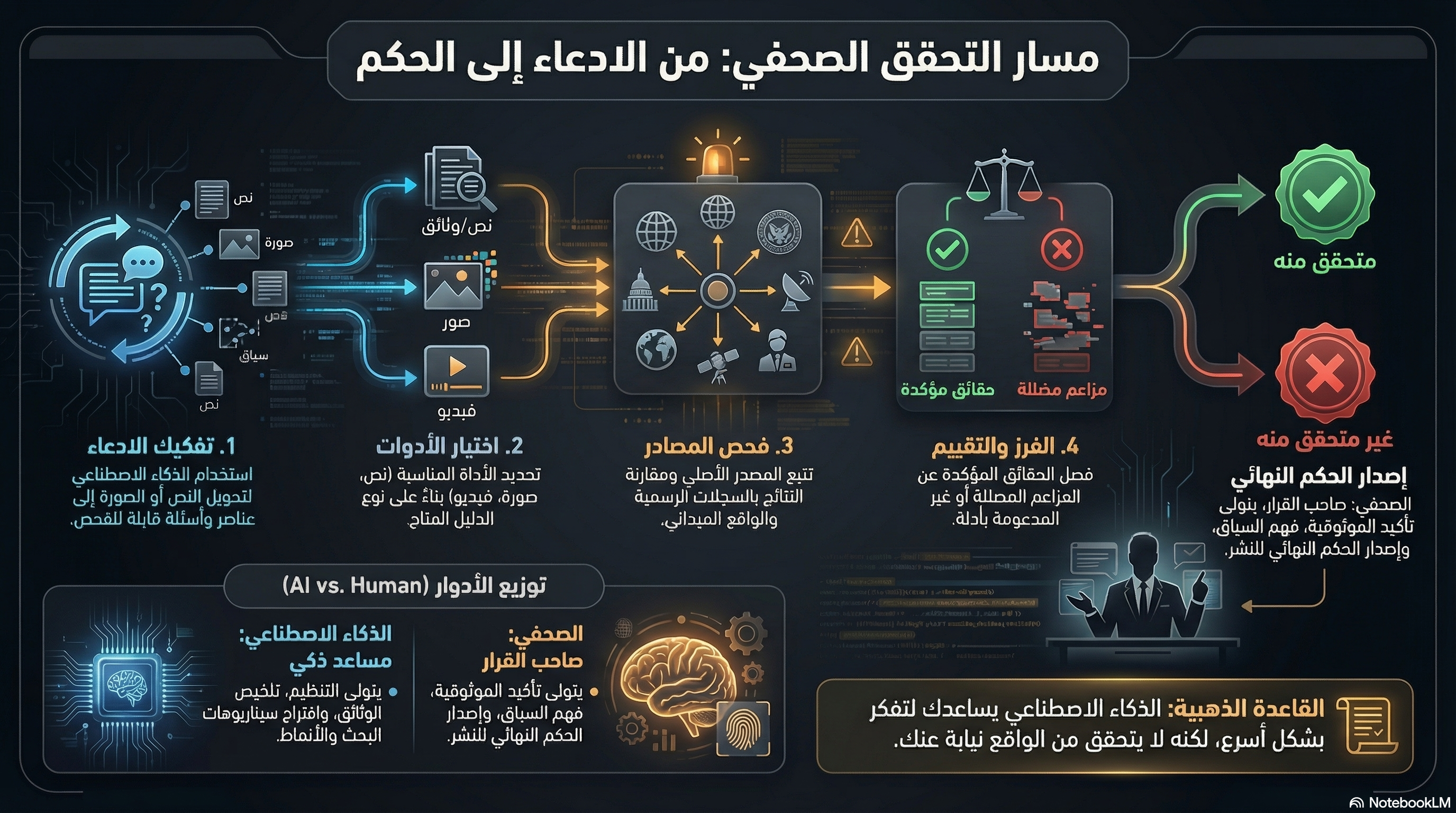
There are many files, some duplicated or missing pages, and there is a strong temptation to use AI to summarize everything quickly.
The risk here is not just misunderstanding. It is losing the link between each original document and the claim derived from it.
Editorial decision simulation
Make a decision at each stage, then read its consequence before moving on. The goal is not scoring points but building a disciplined editorial judgment inside the limits of evidence.
Level 1
The editor wants a fast summary, but the package is messy and some pages have no clear source metadata.
If you start summarizing before inventorying the files, you may lose the original page behind each claim.
What is the strongest first move?
This speeds up superficial understanding but loses source traceability. If an error appears later, you may not know which page produced which claim.
This builds a foundation you can return to later. Organization is not secondary work here; it is part of verification itself.
The intermediary's explanation may help as a starting point, but it does not replace your direct examination of file relationships and provenance.
Level 2
After the initial inventory, you have a cleaner set of files and can use NotebookLM or a similar tool to help structure them.
The goal now is to speed up understanding without letting the tool produce conclusions detached from the documents.
How do you use the tool in the strongest way?
This is the safest use: the tool helps with organization and extraction, while each claim stays tied to its original location.
This can help initial understanding, but it becomes risky if it turns into the main reference because the narrative can outrun the evidence.
Editorial importance should not be decided by the model alone. It may push you toward verbally compelling material that is evidentially weaker.
Level 3
Some of the biggest claims rest on a single document with no clear stamp, while smaller documents are more traceable.
The temptation now is to lead with the biggest story, even if the strongest documents only support more modest points.
How do you weigh the package professionally?
This orders the story by attraction rather than confidence. If the weakest document carries the biggest claim, that must be visible from the start.
This returns the center of gravity to evidence rather than sensation. It also lets you use the package without becoming captive to one questionable file.
Leaked packs are rarely uniform. The differences in quality and provenance are part of the story themselves.
Level 4
After review, you have a set of well-supported points and a few striking claims that still need independent verification or a clearer original.
The editor wants to know whether the pack supports a story now or a longer investigation later.
Which editorial conclusion is strongest?
The size of the pack does not equal the quality of every element inside it. This is the riskiest form of confusing volume with trust.
This strikes the right balance between using the pack and protecting editorial integrity. You do not waste the material, but you do not grant it more than it can support.
Full rejection is sometimes right, but here you still have stronger material that can be used carefully. The key is not to treat the strong and weak parts as equal.
Final reflection
In document packs, the best use of AI is organization, extraction, and linking each claim back to its location, not writing the final story for you. Confidence is built page by page.
Showing the recommended path does not mean the decision was easy. It only reveals which option was strongest at that moment.